
You're standing in a room, and suddenly you notice someone wearing a wig. How do you know? The hairline doesn't match their skin. The hair has a plastic-like sheen. The entire appearance screams artificial. Yet you've also seen people wearing wigs where you genuinely couldn't tell—the hair looked completely natural, the hairline invisible, the overall appearance authentic. The difference between these two scenarios isn't luck. It's not about finding the perfect miracle product. It's about understanding exactly what creates that artificial "wig" appearance in the first place. Once you understand what makes wigs look fake, you can identify what makes them look genuinely real.
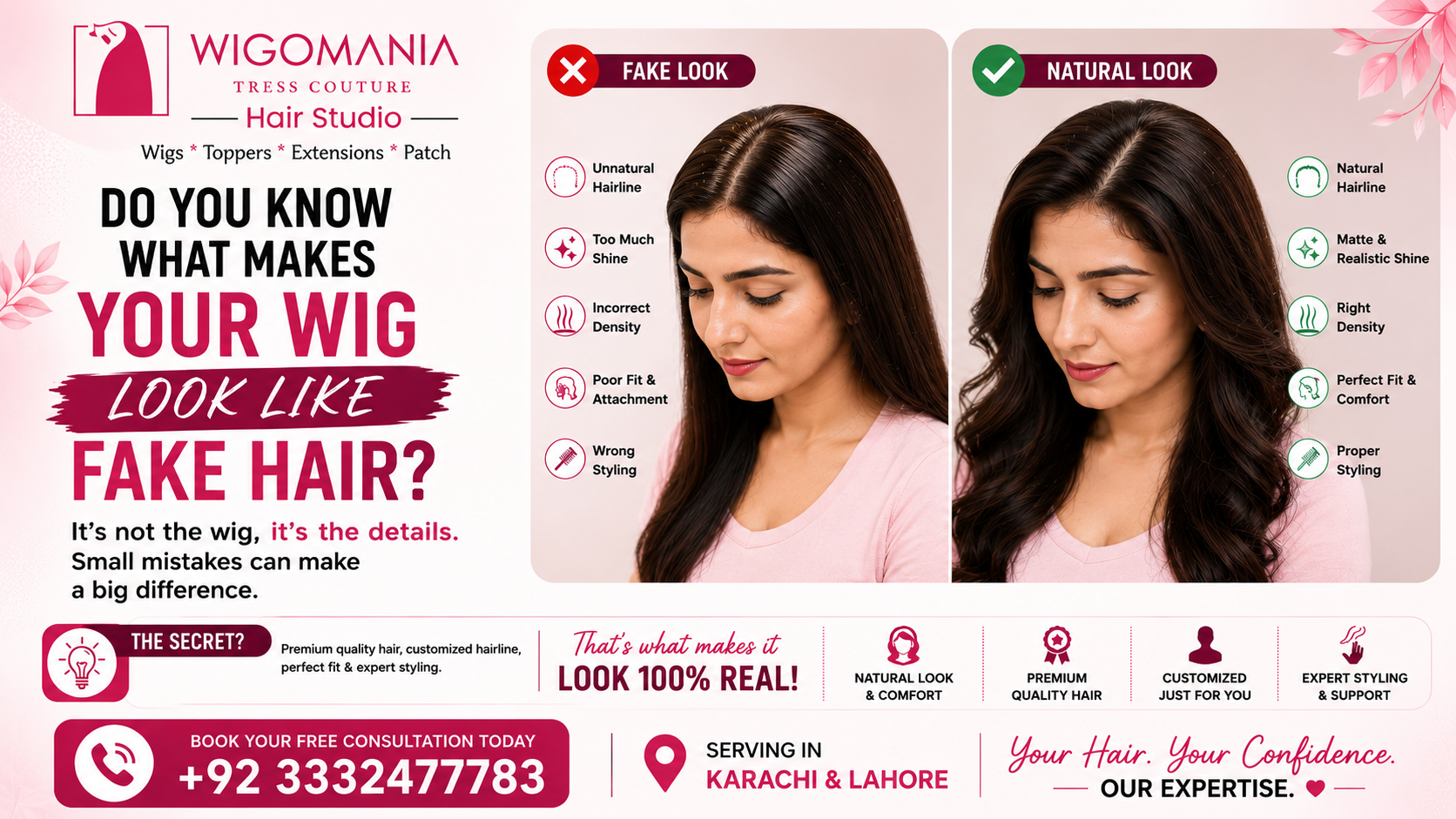
The Visible Signs That Scream "That's a Wig"
Most people can instantly detect an obviously fake wig. But what are they actually seeing? What triggers that immediate "artificial" response? Understanding these visual markers is the first step toward avoiding them.
Why People Know It's a Wig (The Red Flags):
- Dark, harsh hairline: The most obvious giveaway. When scalp shows through the wig's lace or construction, dark knots or threads stand out starkly against skin tone, creating an obviously demarcated line that says "this starts here." Real hairlines fade gradually.
- Plastic-like shine: Synthetic materials reflect light uniformly and artificially. Natural hair has varied light reflection. Synthetic wigs catch light in ways that look obviously plastic, especially in bright conditions.
- Uniform hairline pattern: Real hair doesn't grow in perfect rows or uniformly distributed patterns. When a hairline looks too regular, too organized, too perfect—that uniformity immediately triggers "artificial" recognition.
- Lack of texture variation: Human hair has natural variation in thickness, wave pattern, and texture throughout. Uniform synthetic hair lacks these variations, creating a flat, artificial appearance.
- Stiffness and poor movement: Real hair moves naturally with head motion and responds to environment. Wigs that don't move fluidly or that move as a unit rather than individual strands look obviously artificial.
- Cap visibility around edges: When you can see the wig cap around the temples, ears, or nape—when the construction itself becomes visible—the artificial nature becomes immediately obvious.
- Generic styling: Wigs styled without considering face shape, skin tone, or individual features look generic. When a wig doesn't frame the face properly, doesn't account for personal coloring, it looks obviously like a product rather than personal hair.
Why Some Wigs Look Completely Natural While Others Look Artificial
The contrast between obviously fake wigs and undetectable ones comes down to deliberate choices in materials, construction, and finishing. These aren't mysterious factors—they're specific, identifiable elements that separate real-looking wigs from obvious fakes.
Material Quality: The Foundation of Realism
Synthetic hair is manufactured plastic fiber. No matter how well-constructed, synthetic fibers have inherent characteristics that can look artificial: uniform reflection of light, inability to move like human hair, limited styling flexibility, and a certain plasticky appearance under scrutiny. While synthetic wigs can look acceptable from a distance, they rarely achieve true realism up close.
100% human hair, by contrast, has characteristics that naturally create realistic appearance: varied light reflection, authentic movement and flow, styling versatility identical to real hair, and genuine texture variation. Because it is real hair, it looks real. This fundamental difference in material is why premium wigs universally use human hair.
The Hairline: Where Most Wigs Fail
The hairline is where the wig illusion either succeeds or obviously fails. When a hairline appears as a dark line against skin—when the transition between wig and skin looks demarcated—observers immediately recognize "artificial." This happens because untreated wig hairlines show the knots or threads that secure the hair to the cap.
Professional treatment transforms this. Specialized processes lighten, blend, and customize the hairline to match your specific skin tone. The transition becomes invisible. The boundary between wig and scalp disappears visually. Instead of a demarcated line, observers see hair that appears to grow naturally from your scalp.
Cap Construction: Creating Illusion of Natural Growth
Cheap wig caps sit visibly on the head. You can see them around the edges, notice they don't match the scalp, observe that the hair appears to be attached to something rather than growing from skin. Advanced cap construction—lace-front, monofilament, or hybrid designs—allows selective scalp visibility that mimics natural hair growth. The wig becomes less visible as a constructed object and more visible as hair.
Personalization: The Missing Element in Generic Wigs
Generic wigs are designed for nobody in particular. The color might be close to what you need, but not customized to your exact undertones. The style might suit some face shapes but not yours specifically. The length and layers weren't chosen with your features in mind. This lack of personalization—this generic quality—contributes to artificial appearance.
Professional customization accounts for your specific face shape, skin tone, lifestyle, and preferences. A wig customized to you looks like it belongs on you. It doesn't look like a product you're wearing; it looks like your hair.
The Transformation: From Artificial Appearance to Realistic Look
Understanding what makes wigs look fake also reveals what makes them look real. The transformation from obviously artificial to genuinely realistic comes through addressing each of those artificial characteristics:
Hairline Treatment Transforms Everything
Treating the hairline—making it blend invisibly with your skin tone—eliminates the most obvious "wig" marker. This single element creates a disproportionate improvement in appearance. Many people report that proper hairline treatment is what finally allows them to wear wigs with confidence.
Quality Materials Support Realism
Using 100% human hair instead of synthetic immediately improves realism. Human hair moves naturally, reflects light authentically, responds to environment like real hair, and can be styled like real hair. The material itself supports the illusion of natural hair.
Advanced Cap Design Creates Natural Illusion
Proper cap construction makes the wig less visible as a constructed object. When the cap is less obvious, the hair appears more like it's growing from the scalp. This architectural choice affects whether an observer thinks "wig" or "hair."
Professional Styling Creates Context
When a wig is styled to frame your specific face properly, matches your undertones precisely, and accounts for your personal style—when it's customized to you—it stops looking like a generic product and looks like your hair. The styling becomes the final piece that transforms an artificial product into personal appearance.
What Separates Professional Wigs from Retail Products
This distinction explains why wigs purchased online look so obviously artificial while professionally finished wigs often go undetected. Retail wigs arrive untreated. Professional studios treat them.
A retail wig straight from the box has an unfinished hairline, generic styling, and no customization. It looks like what it is: a product. Professional studios assess your specific needs, select appropriate wigs, treat the hairline professionally, customize styling, and ensure proper fitting. The result looks like hair, not a product.
In Karachi and Lahore: Finding Realistic Wigs
🏢 Understanding the Marketplace
If you're in Karachi or Lahore seeking wigs that don't look obviously fake, you face a choice between retail products (which typically do look artificial) and professional solutions (which can look genuinely realistic).
Retail shops typically stock untreated wigs. These arrive as generic products without the specialized finishing that transforms appearance. Professional studios, by contrast, specialize in addressing exactly what makes wigs look fake and transforming them into realistic solutions.
Both Karachi and Lahore have Wig-O-Mania studios specializing in professional finishing that addresses each element of artificial appearance:
- Hairline treatment customized to your skin tone
- Cap construction selection for natural appearance
- 100% human hair products exclusively
- Professional styling and fitting
- Personalization to your features and preferences
🌐 Book online: https://www.wigomania.co.uk/
✨ Offer: 15% OFF MRP on consultation and purchase
Common Questions About What Makes Wigs Look Fake
Ready to Stop Wearing Wigs That Look Fake?
Now that you understand exactly what makes wigs look artificial, you understand what's required for realism. Professional wigs aren't a luxury—they're the only solution that truly addresses what creates artificial appearance.
Visit Wig-O-Mania in Karachi or Lahore to discover wigs that actually look real.
Book Your Free Consultation📞 Call: +91-99628-31281 | 💝 Enjoy 15% OFF MRP
Conclusion: Understanding and Avoiding Artificial Appearance
The difference between a wig that obviously looks fake and one that looks genuinely real comes down to understanding specific elements: material quality, hairline treatment, cap construction, texture variation, and personalization. Each element contributes to whether an observer sees "artificial" or "hair."
Most retail wigs look obviously fake because they ignore these elements. They arrive untreated, unstyled, and unpersonalized. Professional wigs, by contrast, address each factor deliberately, transforming products into realistic solutions.
In Karachi and Lahore, Wig-O-Mania specializes in exactly this transformation—taking what could look artificial and making it look genuinely real through professional finishing, quality materials, and personal customization.
The next time you see someone wearing a wig that looks completely undetectable, understand that they're not wearing magic. They're wearing professional-quality wigs that deliberately address every element that typically makes wigs look fake. They've eliminated the dark hairline, the plastic sheen, the uniform pattern, the generic styling.
If you want a wig that genuinely looks real—that people don't immediately recognize as artificial—professional finishing isn't optional. It's essential. It's what separates wigs that look obviously fake from wigs that look like actual hair.
📍 Wig-O-Mania — Serving Karachi & Lahore
Book your personalized consultation today.
Visit Us in Karachi
📍 Wig-O-Mania Karachi Plot no. 43-C, DHA Phase 6, Shahbaz Commercial, Karachi
📞 Call Ms. Sabira: +92 333 2477783
Comments (0)